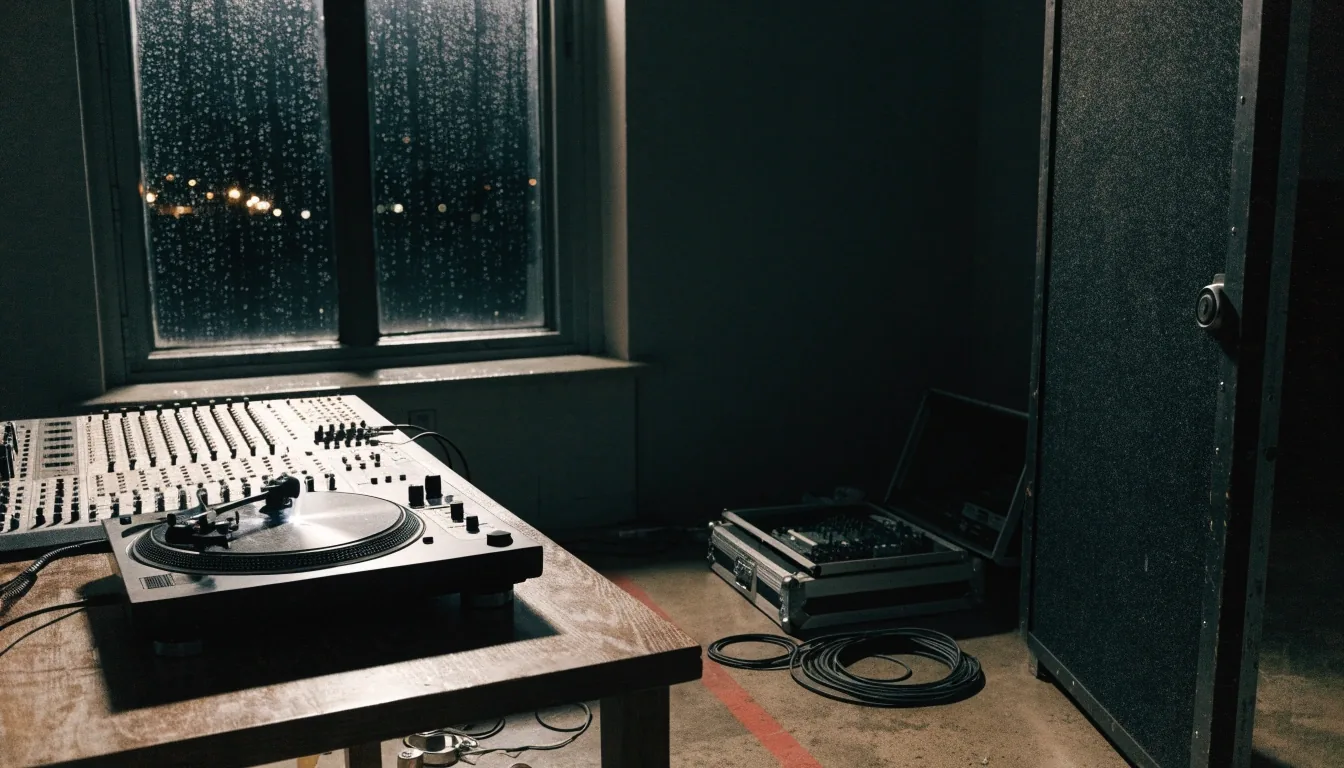
DJ Lane Studio teaches Toronto how to mix
A DJ academy and music production space on Queen Street West: dj lessons, rehearsal rooms, audio recording, and sound design under one roof.
Walk in with a project, not a résumé
If you are starting from zero, you do not need gear or a music background to walk in. We start with the mechanics people skip, and we build the rest around what you actually want to make.
If you already play out, you can book a room, bring your project, and work on the parts that are not landing yet. Nobody here needs a following to get a time slot — you need a project and a booking.
What we actually teach
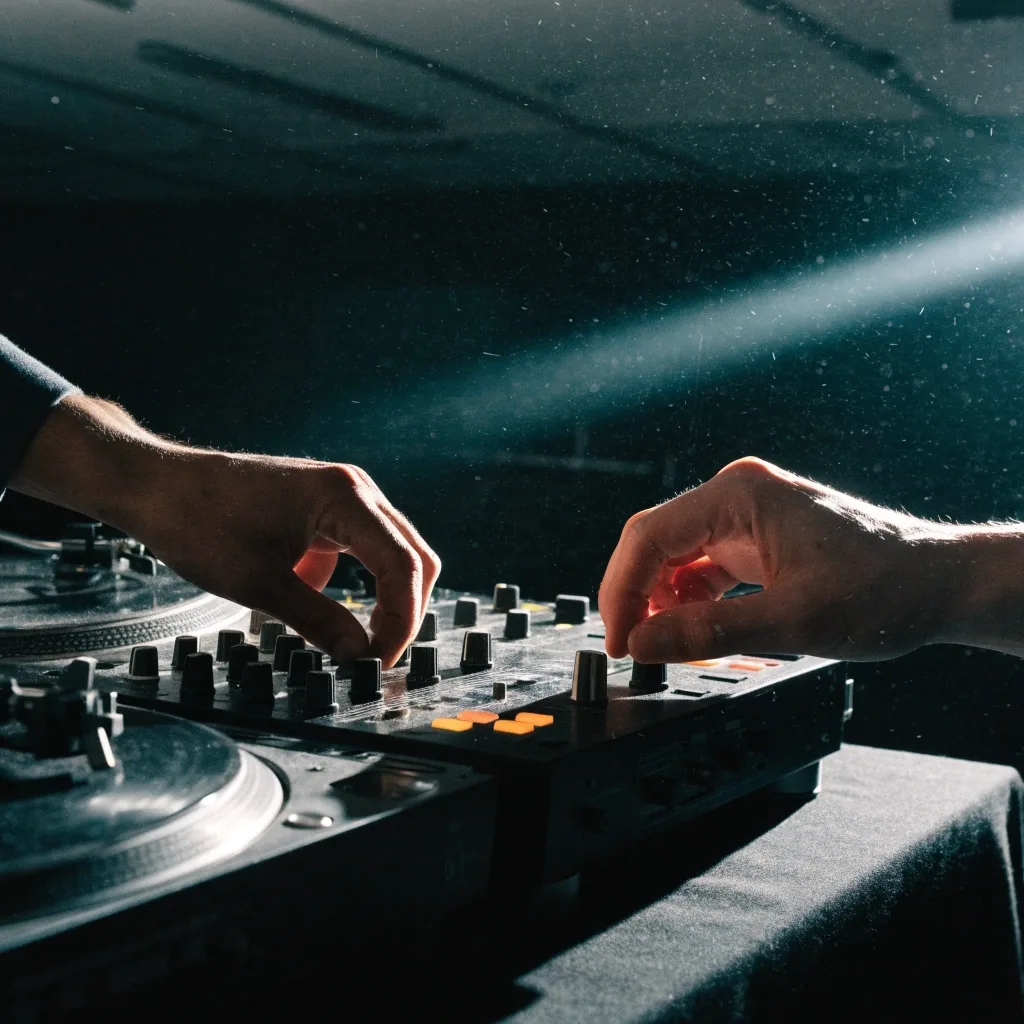
Our dj lessons start with the mechanics people skip: cueing, phrasing, and holding a mix together without staring at the waveform. From there we move into EQ, gain structure, and reading a room. Production students work in the same building, so a DJ student who wants to make edits or original tracks can cross over without changing schools.
Toronto has no shortage of places to learn. What matters is whether you leave each session able to do something you could not do before.
Where lessons usually start
Beatmatching and cueing
Hearing the beat, dropping on the right phrase, and recovering when a blend drifts.
EQ and gain structure
Cleaning up two tracks that fight each other, and keeping levels sane from the booth to the speakers.
Set construction
Ordering tracks, managing energy across an hour, and knowing what your next move is before the drop.
Bring headphones and a USB drive with music you like. The studio supplies the decks and the mixer.
The room is part of the lesson
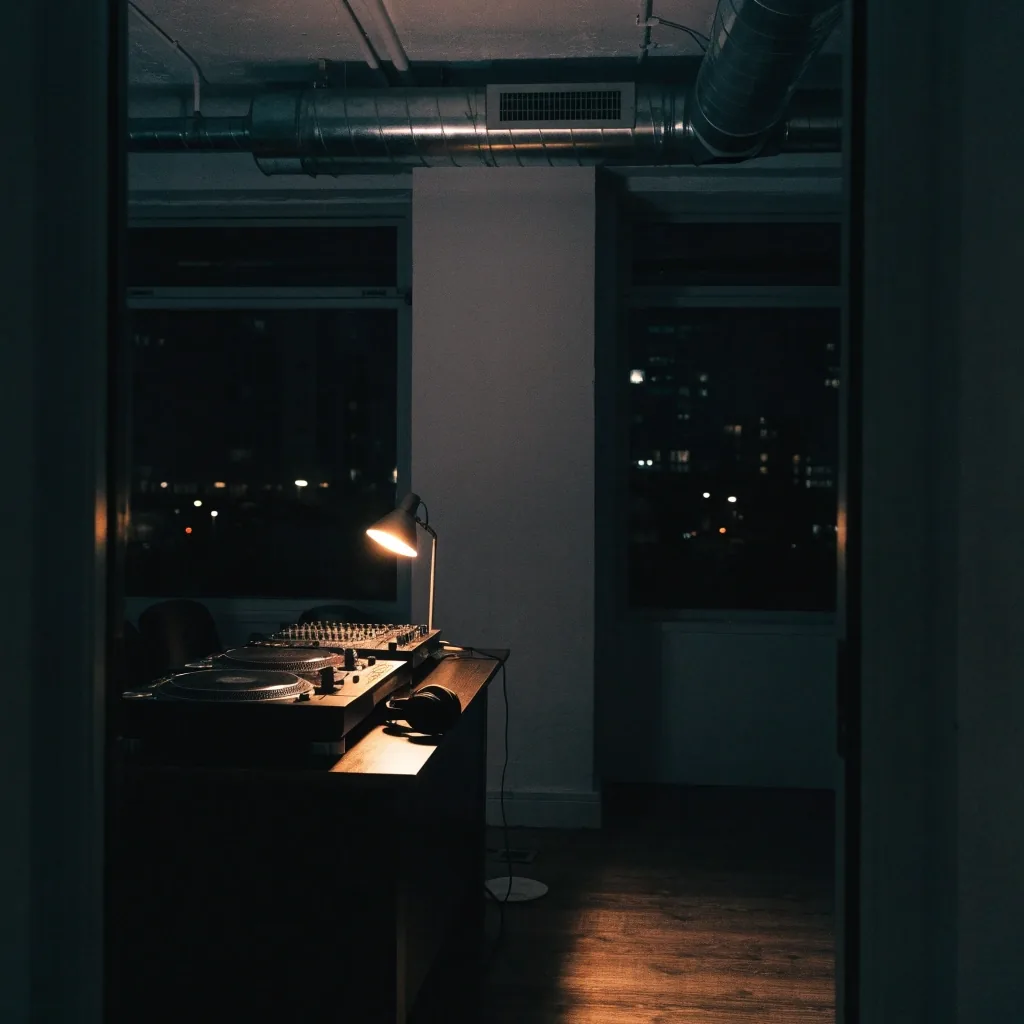
Club-standard decks, a real booth, and a mixer you can learn on before you meet it at a gig.
Toronto, and why the room matters
Practicing on laptop software alone teaches you the software. Club gear has different feel, different resistance, different cue behavior. Rehearsing on a real setup in Toronto before a show is not a luxury; it is the difference between a clean set and a nervous one.
That is also why our rehearsal rooms are booked by working DJs as often as by students. Same layout, same fader travel, same cue lights as the booth you will stand in later that week.
Rooms, gear, and what is in them
The studio runs rehearsal rooms with club-standard CDJs and a mixer, plus a separate recording space with a vocal booth and multitrack capture. You can rehearse a set on the same layout you will meet at a gig, then walk into the recording room with the arrangement already tight.
Rehearsal room
Club-standard CDJs and a mixer on a fixed table layout, monitors at gig height, room to stand and move.
Recording space
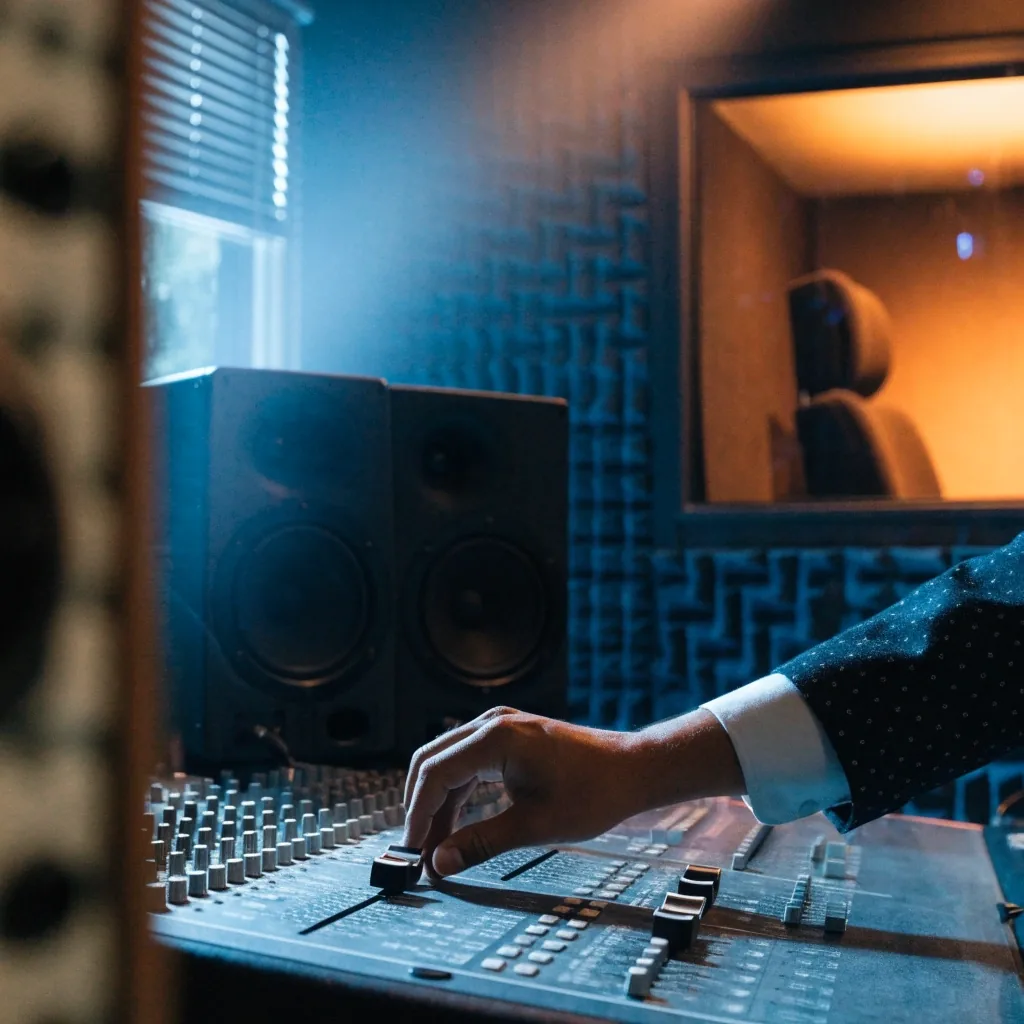
A treated vocal booth, a condenser microphone, and multitrack capture for vocals, instruments, or a full arrangement.
Single-room setup
Control and recording areas sitting together in one contained room, so nothing gets lost between takes.
Production desk
A seated workstation for editing, arrangement, and mix work when you want to hear your project on monitors.
Solo artists and small projects often prefer the contained single-room setup. We can set the room either way depending on what you booked — say so when you send your enquiry and we will confirm what is available for your date.
Recording, mixing, and mastering are three different jobs
Recording captures the performance. Mixing balances the tracks into one coherent piece. Mastering prepares that mix for release and streaming.
A lot of Toronto artists arrive asking for mixing when what they need is a better recorded take, or a mix that has never been properly finished. We will tell you which stage your project is actually at before you spend session time on the wrong one.
Bring a reference track and we will take it apart
Sound design is where a track stops sounding like a preset pack. We work on synthesis, sample layering, and processing that fits your genre instead of fighting it — for producers building original material, and for DJs who want intro edits, transitions, or tools built for their own sets.
Who books with us
- Beginners who want a clear first step and a room where nobody is watching them fail.
- Working DJs who need a room and honest feedback on a set before the weekend.
- Vocalists and rappers recording a demo or a single, from first take to a finished mix.
- Podcasters and voice-over clients who need clean spoken-word capture in a treated booth.
- Producers who want a second set of ears on a mix that is almost there.
You do not need to be signed, and you do not need a following.
How booking works
Pick the service you need, check the schedule, and send an enquiry. We confirm availability and the format that fits your level. If you are unsure whether you want lessons or studio time, say so in the message and we will point you to the right option.
Rehearsal before a recording session
A common and useful order: book a rehearsal room first, tighten the arrangement and the performance, then record. Sessions go faster when the parts are already decided, and it costs less than discovering arrangement problems with the clock running in the recording room.
Lessons for people who already DJ
Not every student is a beginner. If you can hold a mix but your transitions feel flat, or your library is a mess, we work on that specifically. Advanced sessions skip the basics and go straight to phrasing, energy management, and set construction.
Sessions are built around your own tracks, not a fixed curriculum, so the feedback applies to the set you are actually playing this month.
What a first month looks like
Week one
Setup and fundamentals: hearing the beat, cueing, and basic blends.
Week three
Most students are running longer mixes and starting to hear their own mistakes.
Week four
We are usually fixing specific habits rather than teaching new concepts.
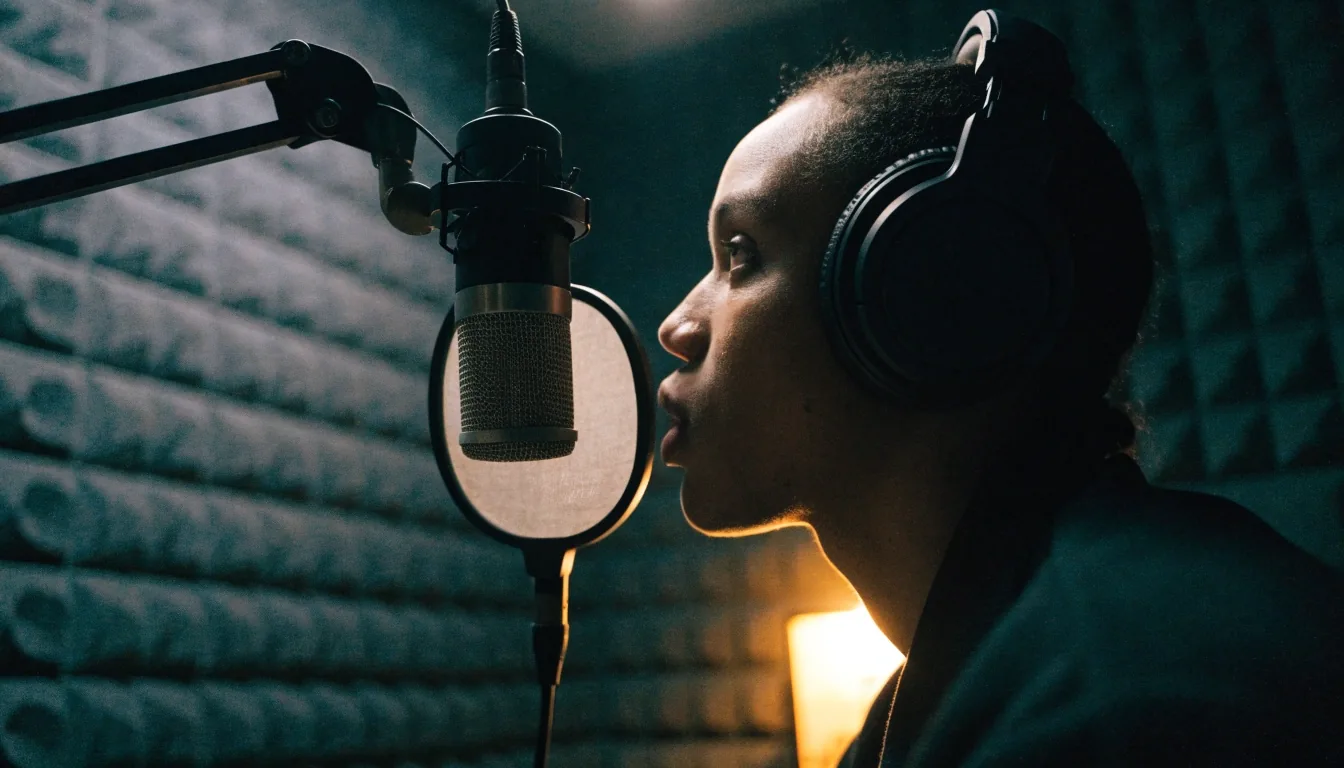
Podcast and voice work
Music studios have diversified into spoken-word production, and it makes sense. A treated vocal booth, a decent microphone, and someone who knows gain staging will get a podcast or voice-over sounding broadcast-ready. We handle music, dialogue, and mixed projects in the same space.
What a session covers
- Microphone placement and room setup for a consistent spoken-word tone.
- Gain staging and clean capture, so edits later do not fight the noise floor.
- Music beds and dialogue balanced together when an episode needs both.
- Handover of raw multitrack or a finished mix, depending on what you booked.
From first lesson to finished track
Most people come in with one goal and leave with a clearer one. A DJ student might start with beatmatching and end up producing edits. A producer might arrive with a half-finished EP and leave with three tracks ready to mix. The path is not fixed, and we would rather adjust it than push you through a template.
If you want a rough shape to plan around: start with dj lessons for the fundamentals, add production or sound design sessions when you want to make your own material, then book a rehearsal room and a recording session once the arrangement holds together. Nothing about that order is mandatory — it is just the route most students find shortest.
We are not a label and we do not promise placements or streams. We teach, we record, and we rent rooms. What you build with those tools is yours.
Questions we get before a first booking
Do I need my own equipment for DJ lessons?
Can I learn DJ skills and production in the same program?
What is the difference between mixing and mastering?
How much studio time does a demo need?
Should I book a rehearsal room before recording?
Pick a service, check the schedule, send an enquiry
Tell us what you want to work on and roughly when you are free. We confirm availability, suggest the format that fits your level, and send the details for your session at 1186 Queen Street West.
Open Monday to Friday 10:00 AM – 8:00 PM, Saturday 11:00 AM – 6:00 PM. Closed Sunday.